


Stroke Recovery in the Age of AI: Why Better Assessment Matters
After a stroke, questions about recovery can be difficult to answer. Will movement return? Why is an everyday task still exhausting? What support will make the greatest difference? Care teams rely on assessment to understand these difficulties, plan rehabilitation and review progress. As researchers explore how artificial intelligence could support stroke care, the quality and meaning of those assessments become especially important.
A stroke occurs when blood flow to part of the brain is disrupted by a blockage or bleeding. It is a medical emergency, and rapid diagnosis and treatment are essential. Once the immediate emergency has passed, assessment continues to guide care as the person’s condition and needs change.
What assessment tells us about recovery
Assessment involves gathering and interpreting information about how stroke has affected a person and their everyday life. It can include clinical examinations, brain scans, standardised tests, observation of daily activities and conversations with the stroke survivor and, where appropriate, their family or carers.
Movement is one part of this picture. Stroke can also affect sensation, communication, memory, mood and vision. Fatigue or difficulty concentrating may be less visible than weakness, but can still have a substantial effect on daily life. NICE’s stroke rehabilitation guidance recommends assessing a broad range of needs and involving people in setting goals that matter to them.
A useful assessment connects these findings to practical goals, such as dressing independently, preparing a meal or returning to work. Repeated assessments help teams review progress and adjust support. A change in a test score matters most when clinicians understand what it means for the person’s abilities, safety and priorities.
Why one measurement cannot tell the whole story
Established clinical assessments provide essential information, but each captures a particular aspect of recovery. A brain scan shows features of the injury; a movement test examines physical performance; a conversation may reveal difficulties that arise at home. These perspectives complement one another.
Assessment also needs context. Performance can vary with fatigue, pain or the demands of a task. Being able to lift an arm during a test does not necessarily mean someone can safely pick up and hold a cup of hot tea at home. Two people with similar test scores may face different everyday challenges. Information gathered by different professionals, devices and services must therefore be interpreted together.
Assessment and prediction also answer different questions. Assessment describes a person’s current condition and abilities. A prediction estimates what may happen later. Predictions can inform planning, but they carry uncertainty and need to be reviewed as new information becomes available.
How AI could support better assessment
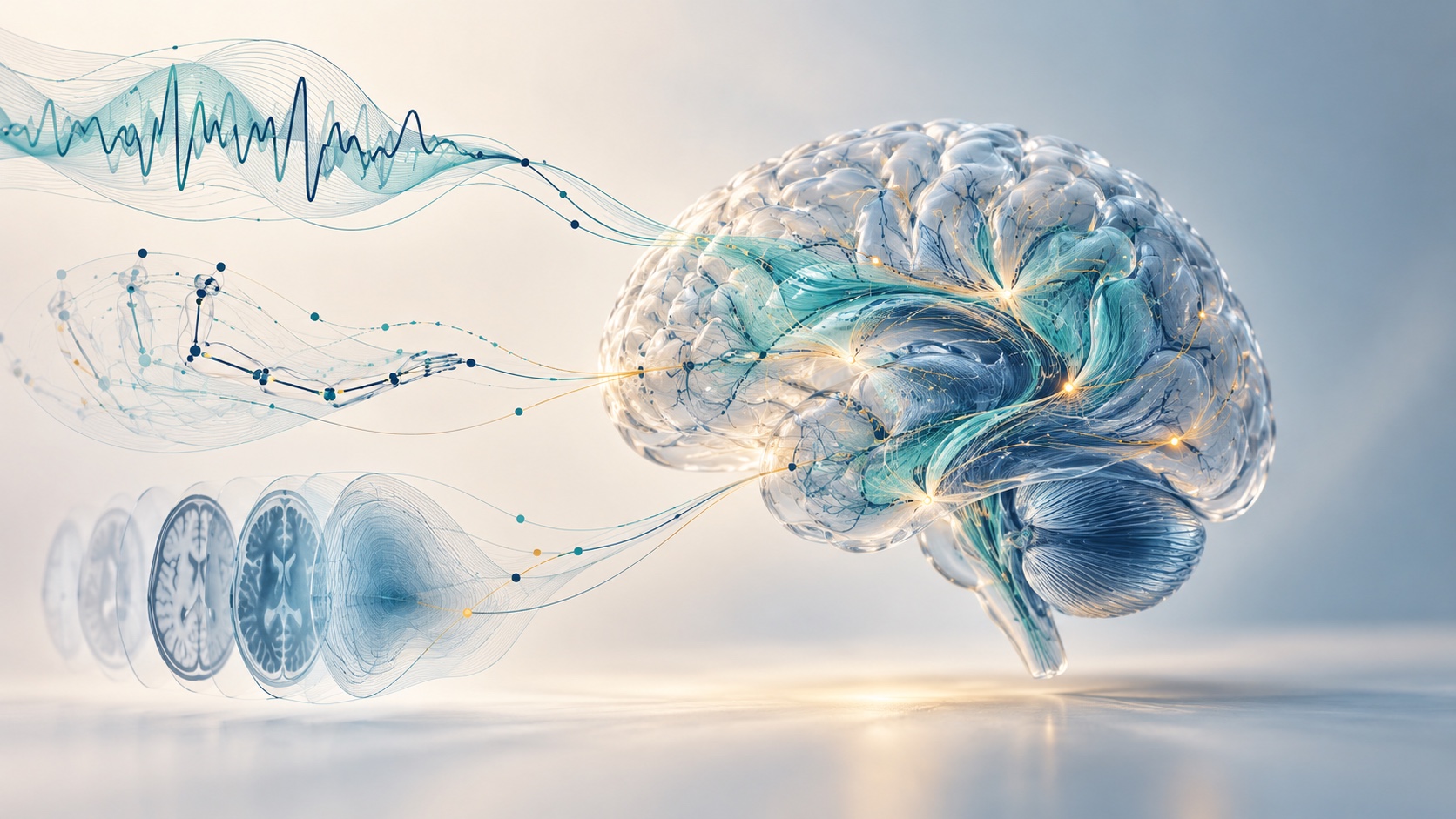
Artificial intelligence refers to computer systems that can analyse data and identify patterns. In stroke research, one approach is to combine different types of information, known as multimodal data. Brain imaging, brain signals, movement measurements and clinical assessments may offer complementary insights.
AI could help researchers examine relationships across these measurements, track changes over time and investigate which patterns are associated with recovery. For example, researchers have tested machine learning models that use early clinical measurements to estimate later arm and hand function. Such research may eventually support more informed rehabilitation planning.
The important question is whether these tools add useful information to existing care. More data or a more complex model does not automatically produce a better assessment. Researchers need to establish whether a tool measures what it claims to measure, works reliably for different people and helps clinicians make decisions that benefit patients.
Keeping assessment meaningful and trustworthy
AI depends on the quality and range of the data used to develop it. Missing information, inconsistent measurements or underrepresentation of some patient groups can limit its usefulness. Tools need evaluation across relevant populations and care settings, with clear information about their limitations and uncertainty.
WHO guidance on AI for health emphasises human oversight, safety, transparency, equity and protection of personal information. In practice, clinicians need to understand how to use an output and when to question it. Stroke survivors also need accessible explanations and opportunities to discuss what the information means for their care.
Care decisions should bring this evidence together with clinical judgement and the person’s goals. A recovery estimate should be communicated with its uncertainty and should not be treated as a fixed limit on what someone might achieve.
How CEREBRIS aims to contribute
CEREBRIS aims to develop a secure, federated and explainable AI ecosystem for stroke care. By bringing together brain signals, brain imaging, movement data and clinical information, the project seeks to build a fuller picture of each person’s condition and how it changes over time.
A particular research focus is understanding recovery of movement and sensation. The project will investigate which combinations of measurements could support more objective assessment, monitoring and recovery prediction. Its ambition is to provide evidence that could help healthcare professionals tailor future care and rehabilitation to individual needs.
CEREBRIS is also exploring privacy-preserving approaches to collaboration across institutions. Its technologies remain under development: their safety, reliability and clinical usefulness will need to be demonstrated, with further validation and regulatory review required before use in routine care.
Better assessment for life after stroke
Better assessment means understanding how a person is doing, what has changed and what support they need next. AI may help care teams interpret complex information, while stroke survivors’ experiences and priorities remain central. The value of these technologies will depend on whether they help turn that understanding into care that supports everyday life.
Be part of the CEREBRIS community.
References
National Institute for Health and Care Excellence. (2023). Stroke rehabilitation in adults (NICE Guideline NG236). https://www.nice.org.uk/guidance/ng236
NHS. (2024, September 12). Symptoms of a stroke. https://www.nhs.uk/conditions/stroke/symptoms/
van der Gun, G. J., Meskers, C. G. M., Andrinopoulou, E. R., Grauwmeijer, E., Hoogendam, L., van Wegen, E. E. H., ICAI Stroke Lab, Kwakkel, G., & Selles, R. W. (2025). Can machine learning improve on the early prediction of upper limb recovery after stroke? Journal of NeuroEngineering and Rehabilitation, 22, Article 223. https://doi.org/10.1186/s12984-025-01743-4
World Health Organization. (2021, June 28). WHO issues first global report on artificial intelligence (AI) in health and six guiding principles for its design and use. https://www.who.int/news/item/28-06-2021-who-issues-first-global-report-on-ai-in-health-and-six-guiding-principles-for-its-design-and-use
World Health Organization. (2025, December 19). Stroke. https://www.who.int/news-room/fact-sheets/detail/stroke