
Meet the team

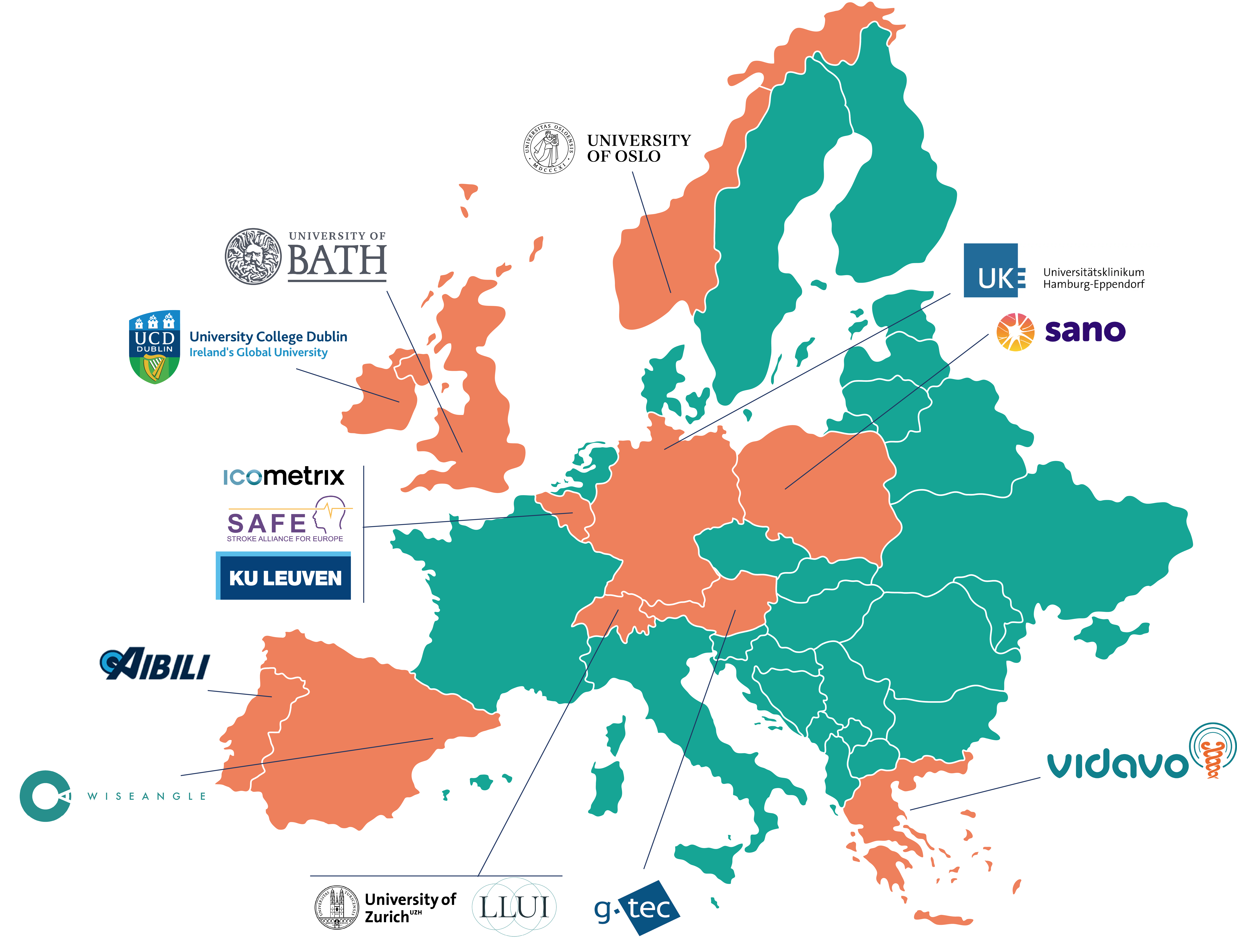
CEREBRIS brings together 14 European partners with complementary expertise across research, clinical care, technology and innovation. The consortium spans neuroimaging, AI, neurotechnology, digital biomarkers, rehabilitation, clinical research, ethics, data governance and stakeholder engagement. By connecting these disciplines, CEREBRIS can work across the full innovation pathway — from scientific and technological development to clinical evaluation and future translation.

How we work together

CEREBRIS is structured around interconnected Work Packages (WPs) that link research, technology development, clinical validation, project coordination and future translation. Rather than working as separate streams, the WPs are designed to exchange knowledge, data and insights throughout the project, helping to align technological development with clinical, ethical and innovation needs.

‍

One consortium · Six connected Work Packages

CEREBRIS
WP1AIBILI

Ethics Requirements and Data Management

WP1 - Guides ethical research and responsible data management. It covers informed consent, participant confidentiality and the ethical questions raised by digital biomarkers and biobanking. It also establishes data-handling procedures and considers fairness, transparency and accountability in the development of AI.
Joana Formigal Tavares
Work Package leadJoana Formigal Tavares

WP2UBAH

Project Coordination and Management

WP2 coordinates the consortium’s scientific and administrative activities. It monitors progress, budgets and risks while supporting quality assurance, reporting and cooperation across Work Packages. Regular exchanges help partners share knowledge, resolve challenges and keep research activities aligned with the project’s objectives.

Jibraan Esoof
Work Package leadDr. Jibraan Esoof
WP3SANO

Agentic AI Platform Development and AI Infrastructure

WP3 develops the AI platform, digital interfaces and infrastructure connecting data, devices, clinicians and patients. It includes robotic sensory assessment technology and the integration of imaging and brain signals. Federated learning is designed to support collaborative, privacy-preserving model training.

Maciej Malawski
Work Package leadProf. Maciej Malawski
WP4UBAH

Multimodal Data Integration and Analytics

WP4 combines brain imaging, neural signals and movement data through standardised collection and analysis methods. It develops AI models and explores synthetic imaging, while identifying digital biomarkers linked to sensory and motor recovery and evaluating their reliability and predictive performance.

Damien Coyle
Work Package leadProf. Damien Coyle
WP5UKE

Early Clinical Studies

WP5 conducts early clinical studies to collect data on stroke recovery and evaluate assessment technologies. It coordinates participant recruitment, follow-up assessments and data management, with monitoring of participant safety and data quality. The work also informs plans for further clinical evaluation.

Bastian Cheng
Work Package leadPD Dr. med. Bastian Cheng
WP6WISE ANGLE

Communication, Dissemination and Research Translation to Innovation

WP6 shares research findings with scientific and public audiences. It engages patients, clinicians and other stakeholders to gather perspectives that inform research and future development. The work also covers intellectual property and regulatory planning, exploring routes towards future clinical and commercial applications.

Georgia Karyami
Work Package leadGeorgia Karyami